Granuloma Annulare
5
AT-A-GLANCE
■ Granuloma annulare is a relatively common disorder. The exact prevalence is unknown, but it occurs more often in children and young adults.
■ A localized ring of beaded papules on the extremities is typical; generalized, subcutaneous, perforating, and patch subtypes also occur.
■ The cause of granuloma annulare is unknown, and the pathogenesis is poorly understood.
■ Pathologic features consist of granulomatous inflammation in a palisaded or interstitial pattern associated with varying degrees of connective tissue degeneration and mucin deposition.
■ Most localized cases resolve spontaneously within 2 years.
Granuloma annulare is a benign self-limited disease that was first described by Colcott-Fox in 1895 and Radcliffe-Crocker1 in 1902.
EPIDEMIOLOGY
Granuloma annulare is a relatively common disorder.2
It occurs in all age groups but is rare in infancy.2-4 The localized annular and subcutaneous forms occur more frequently in children and young adults. The generalized or disseminated variant is more common in adults. Many studies report a female preponderance,2
but some have found a higher frequency in males.5
Granuloma annulare does not favor a particular race or geographic area. Most cases of granuloma annulare are sporadic. Occasional familial cases are described with occurrence in twins, siblings, and members of successive generations.2,6,7 Attempts to identify an associated human leukocyte antigen subtype have yielded disparate results in different population groups.
CLINICAL FEATURES
HISTORY
HISTORY
The typical history is of one or more papules with centrifugal enlargement and central clearing. These annular lesions are often misdiagnosed as tinea corporis and treated unsuccessfully with topical antifungal agents. Subcutaneous nodules may raise suspicion about malignancy or rheumatoid disease.
Granuloma annulare is usually asymptomatic. Mild pruritus may be present, but painful lesions are rare. Nodular lesions on the feet may cause discomfort from footwear. Cosmesis is often a concern for adolescent and adult patients, particularly with generalized disease.
CUTANEOUS FINDINGS
CUTANEOUS FINDINGS
Clinical variants of granuloma annulare include the localized, generalized, subcutaneous, perforating, and patch types. Linear granuloma annulare, a follicular pustular form, papular umbilicated lesions in children, and giant plaques have also been described. There is overlap among the different variants, and more than one morphologic type may coexist in the same patient.
LOCALIZED TYPE
The most common form of granuloma annulare is an annular or arcuate lesion. It may be skin colored, erythematous, or violaceous. It usually measures 1 to 5 cm in diameter.2 The annular margin is firm to palpation and may be continuous or consist of discrete or coalescent papules in a complete or partial circle (Fig. 34-1). The epidermis is usually normal, but surface markings may be attenuated over individual papules. Within the annular ring, the skin may have a violaceous or pigmented appearance. Solitary firm papules or nodules may also be present. Papular lesions on the fingers may appear umbilicated. The dorsal hands and feet, ankles, lower limbs, and wrists are the sites of predilection (see Figs. 34-1 and 34-2). Less commonly, lesions occur at other sites, including the eyelids. The palms and soles are occasionally involved. Localized annular lesions may coexist with the subcutaneous or patch forms.
GENERALIZED TYPE
The generalized form of granuloma annulare is said to comprise 8% to 15% of cases.8 The majority of patients are adults, but it may also be seen in childhood. Unlike in localized disease, the trunk is frequently involved in addition to the neck and extremities. The face, scalp, palms, and soles may also be affected. Generalized granuloma annulare presents as widespread papules (Fig. 34-3A), some of which coalesce to form small annular plaques or larger discolored patches with raised arcuate and serpiginous margins (see Fig. 34-3B). Lesions may be skin colored, pink, violaceous, tan, or yellow. An annular or nonannular
A
B
morphology may predominate. A generalized form of perforating granuloma annulare has also been described.
SUBCUTANEOUS TYPE
The subcutaneous form of granuloma annulare occurs predominantly in children9,10 but is also described in adult patients. It is characterized by
5
A
B
firm to hard, usually asymptomatic nodules located in the deep dermis and subcutaneous tissues. They may extend to underlying muscle, and nodules on the scalp and orbit are often adherent to the underlying periosteum. Individual lesions measure from 6 mm to 3.5 cm in diameter. They are distributed most often on the anterior lower legs in a pretibial location. Other sites of predilection are the ankles, dorsal feet, buttocks, and hands. Nodules on the scalp, eyelids, and orbital rim may present a diagnostic challenge. Subcutaneous granuloma annulare may also be found on the penis.
PERFORATING TYPE
The perforating type of granuloma annulare is a rare variant characterized by transepidermal elimination of the necrobiotic collagen. It may be localized, usually to the dorsal hands and fingers (Fig. 34-4), or generalized over the trunk and extremities. It has been described on the ears, on the scrotum, and within herpes zoster scars and tattoos. Superficial small papules develop central umbilication or crusting, and there may be discharge of a creamy fluid. Lesions heal with atrophic or hyperpigmented scars. In one series, 24% of patients complained of pruritus and 21% of pain. Papular umbilicated granuloma annulare on the hands of
565
5
children and a generalized follicular pustular type of granuloma annulare may be clinical variants.
PATCH TYPE
Macular lesions that present as erythematous, redbrown, or violaceous patches without an annular rim are reported in adult women.11 An arcuate dermal erythema is also observed.
NONCUTANEOUS FINDINGS
NONCUTANEOUS FINDINGS
Most patients with granuloma annulare are healthy and have no other abnormal physical findings. Arthralgia is reported in association with painful lesions on the hands.12 Granuloma annulare–like skin lesions and joint disease characterize a multisystem disorder described as interstitial granulomatous dermatitis with arthritis.13
Oral involvement has been observed in HIV-associated disease.14
ETIOLOGY AND PATHOGENESIS
The etiology of granuloma annulare is unknown, and the pathogenesis is poorly understood. Most cases occur in otherwise healthy children. A variety of predisposing events and associated systemic diseases is reported, but their significance is unclear. It is possible that granuloma annulare represents a phenotypic reaction pattern with many different initiating factors.
PREDISPOSING EVENTS
PREDISPOSING EVENTS
Nonspecific mild trauma is considered a possible triggering factor because of the frequent location of lesions on the distal extremities of children. An early study of subcutaneous granuloma annulare found a history of
566
trauma in 25% of children,2 but this observation has not been replicated. Trauma is also a suspected factor in auricular lesions. Granuloma annulare has occurred after a bee sting, a cat bite, and an octopus bite, and insect bite reactions have also been implicated.2 There is a report of perforating granuloma annulare in longstanding tattoos. Widespread lesions have developed after waxing-induced pseudofolliculitis and erythema multiforme minor and in association with systemic sarcoidosis.2,15 Severe uveitis without other evidence of sarcoidosis has occurred in a few patients with granuloma annulare.16-18
INFECTIONS AND IMMUNIZATIONS
There are several reports of the development of granuloma annulare within herpes zoster scars, sometimes many years after the active infection. It is also described after chickenpox. Generalized, localized, and perforating forms of granuloma annulare may occur in association with HIV infection. Adenovirus was isolated from a lesion in one HIV-positive patient. Epstein-Barr virus was excluded as a causative agent in these cases. However, in other instances, generalized granuloma annulare has been linked to viral infections, including Epstein-Barr virus infection, chronic hepatitis B, and hepatitis C. Vaccinations for tetanus, diphtheria toxoid, and hepatitis B vaccination have been implicated as triggering factors, although vaccination sites were spared in one case of generalized granuloma annulare.19
Lesions compatible with granuloma annulare may occur in patients with active tuberculosis. There are also reports of granuloma annulare after tuberculin skin tests and bacille Calmette–Guérin immunization. Evidence of Borrelia burgdorferi infection was detected in two reports, but this association was not confirmed in a serologic study. A case in which chronic relapsing granuloma annulare flared during scabies infestation was attributed to the Koebner phenomenon.20
SUN EXPOSURE
Granuloma annulare with a predilection for sunexposed areas and seasonal recurrence has been described. Photosensitive granuloma annulare has been observed in patients with HIV infection.14 Generalized disease after psoralen plus ultraviolet A (UVA) light therapy is reported, but it is of note that phototherapy and PUVA phototherapy have been used to treat generalized granuloma annulare.21-23
Actinic granuloma, also known as annular elastolytic giant cell granuloma, develops on photodamaged skin and is believed to represent a granulomatous reaction to actinic elastosis.24 Its relationship to granuloma annulare is debated.
DRUGS
Granuloma annulare–like drug reactions are reported for gold therapy and treatment with allopurinol, diclofenac, quinidine, intranasal calcitonin, topiramate,
amlodipine, and thalidomide.25 There are also reports of an association with adalimumab, infliximab, etanercept, efalizumab, and vemurafinib.22,23,25
An interstitial granulomatous drug reaction linked to the use of angiotensin-converting enzyme inhibitors, calcium channel blockers, and other medications is considered a distinct entity but may mimic granuloma annulare.26,27
PATHOGENIC MECHANISMS
PATHOGENIC MECHANISMS
The pathogenic mechanisms that result in foci of altered connective tissue surrounded by a granulomatous inflammatory infiltrate are not understood. Proposed mechanisms include (1) a primary degenerative process of connective tissue initiating granulomatous inflammation, (2) a lymphocyte-mediated immune reaction resulting in macrophage activation and cytokine-mediated degradation of connective tissue, and (3) a subtle vasculitis or other microangiopathy leading to tissue injury.28-30
SYSTEMIC DISORDERS AND GRANULOMA ANNULARE
SYSTEMIC DISORDERS AND
GRANULOMA ANNULARE
DIABETES MELLITUS AND THYROID DISEASE
Development of granuloma annulare in patients with diabetes mellitus is extensively documented. Whether this is a true relationship has long been debated. The link is primarily with type 1 insulin-dependent diabetes, but cases are also reported with type 2 non–insulindependent disease. Localized and generalized as well as subcutaneous nodular and perforating forms of granuloma annulare have been observed. Granuloma annulare rarely predates the onset of diabetes. The histopathologic similarity between granuloma annulare and necrobiosis lipoidica diabeticorum and the coexistence of both conditions in occasional diabetic patients suggest a true association. However, most patients with granuloma annulare do not have diabetes mellitus. Studies attempting to establish a causal correlation have yielded conflicting results.22
Granuloma annulare has also occurred in a number of patients with thyroiditis, hypothyroidism, and thyroid adenoma.22
MALIGNANCY
An association between granuloma annulare and malignancy in adult patients is reported primarily with Hodgkin and non-Hodgkin lymphoma, including mycosis fungoides, Lennert lymphoma, B-cell disease, T-cell leukemia and lymphoma, and angioblastic T-cell lymphoma. It is reported less commonly with myeloid
5
leukemias and with solid tumors, particularly of the breast. The skin lesions of cutaneous lymphoma and other hematologic malignancies can mimic granuloma annulare both clinically and histopathologically. It may be difficult to distinguish whether they represent true granuloma annulare with atypical lymphocytes or cutaneous lymphoma obscured by a granulomatous infiltrate.31,32
DYSLIPIDEMIA
An increased prevalence of dyslipidemia has been reported in patients with granuloma annulare.32 This was more commonly found in generalized granuloma annulare, particularly in cases with an annular morphology.
LABORATORY TESTS
A diagnosis of localized granuloma annulare is made on clinical examination, and further evaluation is rarely indicated. Biopsy to obtain a specimen for histopathologic examination is necessary when the presentation is atypical, when lesions are symptomatic, and when the diagnosis is otherwise in doubt. Histopathologic analysis may be required to confirm a diagnosis of generalized granuloma annulare or subcutaneous nodular disease on the head and orbital region.
HISTOPATHOLOGIC FINDINGS
HISTOPATHOLOGIC
FINDINGS
The diagnosis is best made at low magnification. Changes are usually observed in the upper and middle dermis, although any part of the dermis or subcutis can be involved. The characteristic histopathologic finding is a lymphohistiocytic granuloma associated with varying degrees of connective tissue degeneration and mucin deposition. The inflammatory infiltrate may have a palisaded or interstitial pattern or a mixture of both patterns.33-35 Occasionally, a sarcoid-like pattern with large epithelioid histiocytes is seen. The typical appearance is of single or multiple foci of inflammation with a central core of altered collagen (necrobiosis) surrounded by a wall of palisaded histiocytes (Fig. 34-5). The necrobiotic centers are usually oval, slightly basophilic, devoid of nuclei, and marked by a loss of definition of the collagen bundles and diminished or absent elastic tissue fibers. Stains for mucin and lipid often give positive results.36
An interstitial, nonpalisaded pattern of inflammation with histiocytes infiltrating among fragmented collagen bundles may be predominant, particularly in the generalized form. This interstitial pattern is also observed in the absence of apparent connective tissue change. Stains for mucin may be helpful in detecting connective tissue alteration within the infiltrate.
567
5
Lymphocytes are admixed with histiocytes in the granuloma and in a perivascular distribution. Multinucleated giant cells may be present but are not as numerous as in actinic granuloma.37 Neutrophils and eosinophils are occasionally seen, but plasma cells are rare. Evidence of vascular reactivity includes variable endothelial cell swelling, red cell extravasation, fibrin, leukocytoclasis, and neutrophilic infiltration in blood vessel walls. When leukocytoclastic vasculitis or nuclear debris is a prominent finding, a diagnosis of palisaded neutrophilic and granulomatous dermatitis of immune complex disease should be considered.38
In subcutaneous granuloma annulare (Fig. 34-6), the foci of necrobiosis are larger and lie within the deep dermis and subcutaneous fat. They may be distinguished from rheumatoid nodules by the presence of mucin in the necrobiotic zone. Central ulceration and communication between the area of necrobiosis and the surface are characteristic of perforating granuloma annulare (Fig. 34-7). Examination of serial sections may be necessary to demonstrate the necrobiotic plug. An interstitial pattern of inflammation with diffuse necrobiosis is reported in the patch type of granuloma
568
A
B
annulare. Palisaded granulomas have also been observed in macular lesions. Immunofluorescence testing may show deposition of fibrin, immunoglobulin (Ig) M, and C3 as a variable finding around vessel walls or at the basement membrane zone; IgM cytoid bodies are also reported.39
Immunohistochemistry may be useful to confirm the histiocytic nature of equivocal disease. Ultrastructural changes in the connective tissue and capillaries have been described.40
SPECIAL TESTS
SPECIAL TESTS
A diagnosis of granuloma annulare is made clinically or by skin biopsy. Special investigations are usually not necessary. Further evaluation to rule out systemic disease such as infection, sarcoidosis, or malignancy may be required in atypical cases of granuloma annulare. Investigation for endocrine disease is indicated if the patient has signs or symptoms of diabetes or thyroid dysfunction. Lipid studies may be considered in the evaluation of generalized granuloma annulare.32
Imaging studies may be performed in subcutaneous granuloma annulare when the clinical features are not recognized or when the presentation is atypical with rapid enlargement or pain. Radiographs show a nonspecific soft tissue mass without calcification or bone involvement. Ultrasonographic examination reveals
Annular Type
Consider
■Tinea corporis
■Subacute cutaneous lupus erythematosus
■Neonatal lupus erythematosus
■Annular lichen planus
■Acute febrile neutrophilic dermatosis
■Erythema chronicum migrans
■Actinic granuloma/annular elastolytic giant cell granuloma
■Necrobiosis lipoidica diabeticorum
Rule Out
■Infections (eg, tuberculosis, atypical mycobacteria, syphilis)
■Interstitial granulomatous dermatitis with arthritis
■Interstitial granulomatous drug reaction
■Annular sarcoidosis
■Lymphoma
Generalized Type
Consider
■Lichen planus
■Lichen nitidus
■Molluscum contagiosum
Rule Out
■Lichenoid and granulomatous dermatitis of acquired immunodeficiency syndrome
■Infections (eg, tuberculosis, atypical mycobacteria, syphilis)
■Sarcoidosis
■Blau syndrome (familial granulomatous arthritis, skin eruption, and uveitis)
■Interstitial granulomatous drug reaction
■Lymphoma
Subcutaneous Type
Consider
■Erythema nodosum
■Dermoid cyst
■Rheumatoid nodules
Rule Out
■Epithelioid sarcoma
■Benign or other malignant tumors
■Deep infections
Perforating Type
Consider
■Molluscum contagiosum
■Insect bites
■Pityriasis lichenoides
■Perforating collagenosis and other perforating disorders
■Foreign body granuloma
■Papulonecrotic tuberculid
■Palisaded neutrophilic and granulomatous dermatitis of immune complex disease
Patch Type
Consider
■Morphea
■Erythema annulare centrifugum
■Parapsoriasis
Rule Out
Rule Out
■Lymphoma
■Lymphoma
5
a hypoechoic area in the subcutaneous tissues.41,42
Magnetic resonance imaging shows a mass with indistinct margins, isointense or slightly hyperintense to muscle with T1-weighted images and with a heterogeneous but predominantly high signal intensity on T2-weighted images.41,43
DIFFERENTIAL DIAGNOSIS
See Table 34-1.
TREATMENT
The usual treatment options include awaiting spontaneous resolution, topical steroids, and intralesional steroids. These and various other therapies of anecdotal benefit are summarized in Table 34-2. Most
■Await spontaneous resolution
■Apply topical corticosteroid with or without occlusion
■Administer intralesional triamcinolone 2.5 mg/mL
Anecdotal Reports of Benefit
Anecdotal Reports of Benefit
■Topical
■Topical
■Tacrolimus 0.1% ointment
■Tacrolimus 0.1% ointment
■Pimecrolimus cream
■Pimecrolimus cream
■Imiquimod 5% creama
■Imiquimod 5% creama
■Intralesional
■Intralesional
■Interferon-γ
■Interferon-γ
■Interferon-β
■Interferon-β
■Sterile water or saline
■Sterile water or saline
■Systemic
■Systemic
■Antimalarials
■Antimalarials
■Retinoids
■Retinoids
■Antibioticsb
■Antibioticsb
■Corticosteroids
■Corticosteroids
■Cyclosporine
■Cyclosporine
■Zileuton with vitamin E
■Zileuton with vitamin E
■Fumaric acid esters
■Fumaric acid esters
■Pentoxifylline
■Pentoxifylline
■Hydroxyurea, chlorambucil, niacinamide, potassium iodide, dapsone
■Hydroxyurea, chlorambucil, niacinamide, potassium iodide,
dapsone
■Etanerceptc
■Etanerceptc
■Infliximabc
■Infliximabc
■Efalizumabc
■Efalizumabc
■Adalimumabc
■Adalimumabc
■Other
■Other
■Phototherapyd
■Phototherapyd
■Photodynamic therapy
■Photodynamic therapy
■Fractional photothermolysis Skin biopsy
■Fractional photothermolysis Skin biopsy
■Cryotherapy
■Cryotherapy
■Pulsed dye, Excimer, Nd:YAG or CO2 laser
■Pulsed dye, Excimer, Nd:YAG or CO2 laser
aApplication of 5% imiquimod cream has been reported to worsen granuloma annulare in a child.
bTriple antibiotic regimen (rifampicin, ofloxacin, minocycline), doxycycline, antituberculosis therapy.
cDevelopment of granuloma annulare has been reported during therapy with etanercept, infliximab, and adalimumab.
569
dNarrowband ultraviolet B, ultraviolet A1, psoralen plus ultraviolet A. Nd:YAG, neodymium-doped yttrium aluminum garnet.
5
treatment recommendations are based on single case reports and small cases series, and there are no controlled studies.21-23,44-47
CLINICAL COURSE AND PROGNOSIS
Most cases of localized granuloma annulare resolve spontaneously without sequelae. Lesions may clear within a few weeks or persist for several years. The majority disappear within 2 years. Recurrent lesions may develop months or even years later, frequently at the same site. Generalized granuloma annulare often runs a more protracted course. Perforating granuloma annulare results in scarring. There are a number of reports of anetoderma or middermal elastolysis following generalized granuloma annulare and annular elastolytic giant cell granuloma.48,49 One case of generalized granuloma annulare in a photosensitive distribution healed with scarring and milia formation.50
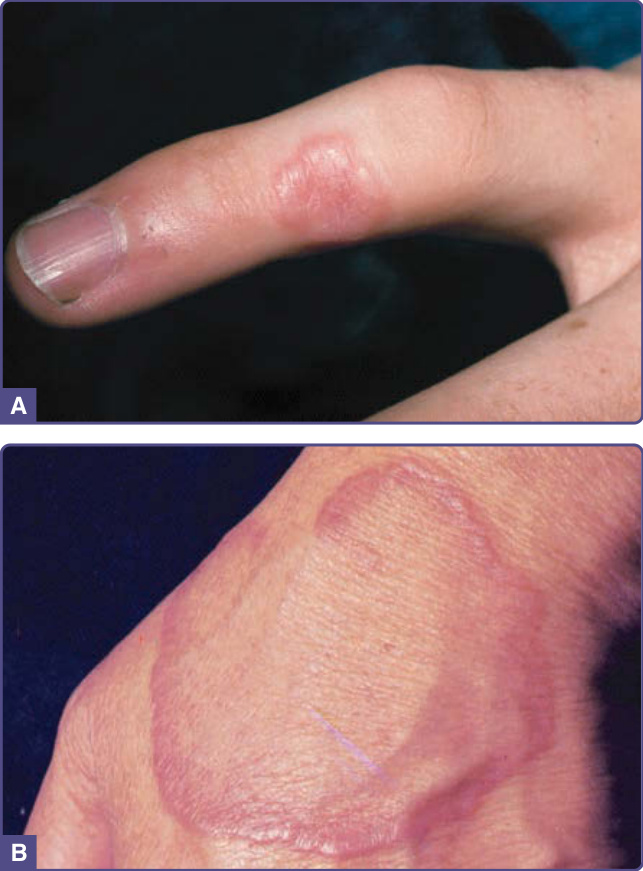
Figure 34-1 A, Typical annular lesion of granuloma annulare on a finger. B, A larger annular lesion of granuloma annulare on the dorsum of the hand.
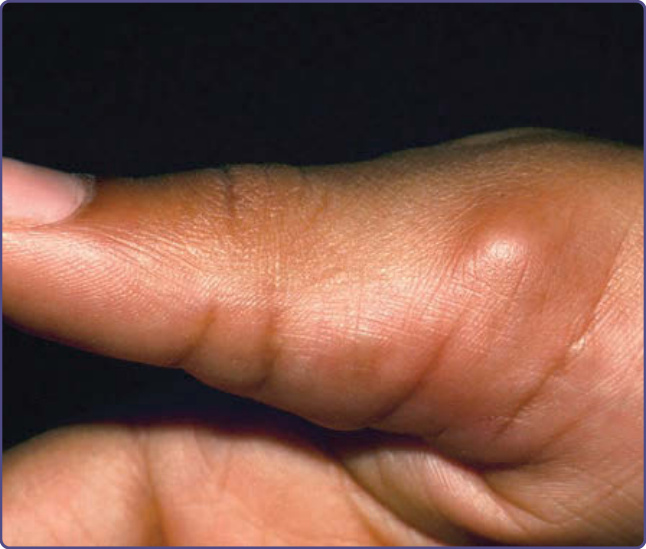
Figure 34-2 Localized granuloma annulare with nodule on the hand of a child.
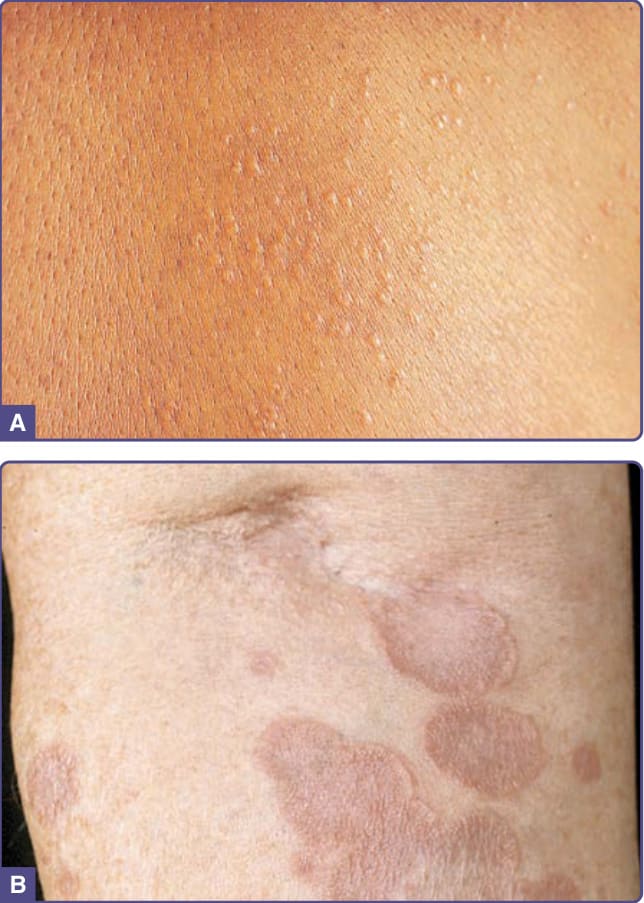
Figure 34-3 A, Generalized granuloma annulare. Small papular lesions that are too small to exhibit annular configuration. B, Multiple annular lesions on the lower arm.
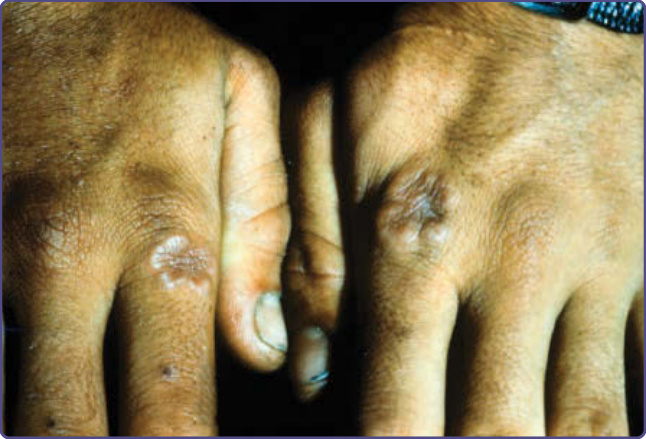
Figure 34-4 Granuloma annulare on the knuckles of a darkskinned patient. (Image used with permission from the Graham Library of Wake Forest Department of Dermatology.)
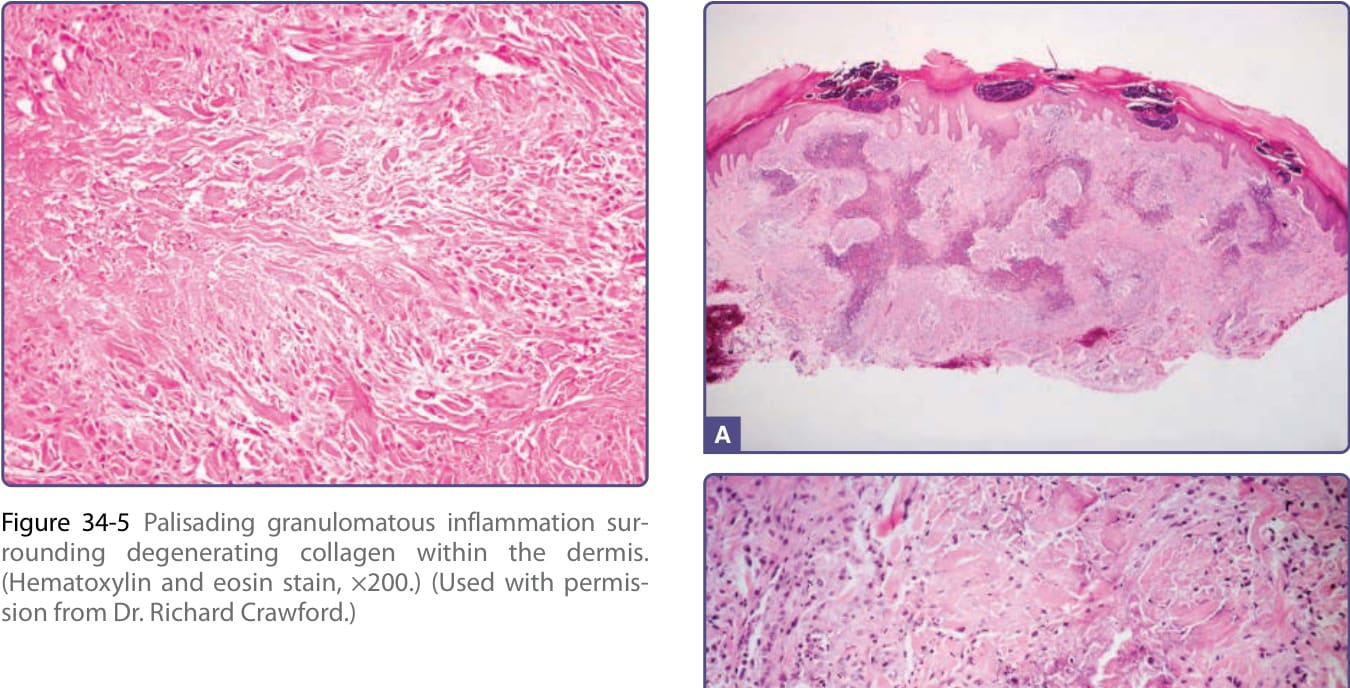
Figure 34-5 Palisading granulomatous inflammation surrounding degenerating collagen within the dermis. (Hematoxylin and eosin stain, ×200.) (Used with permission from Dr. Richard Crawford.)
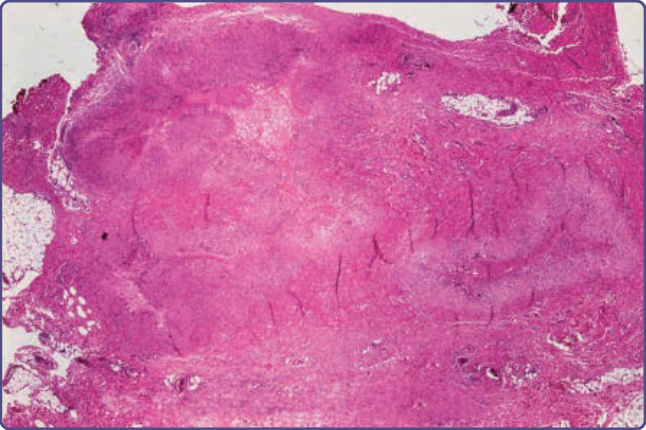
Figure 34-6 Subcutaneous granuloma annulare pathology. (Used with permission from the Graham Library of Wake Forest Department of Dermatology.)
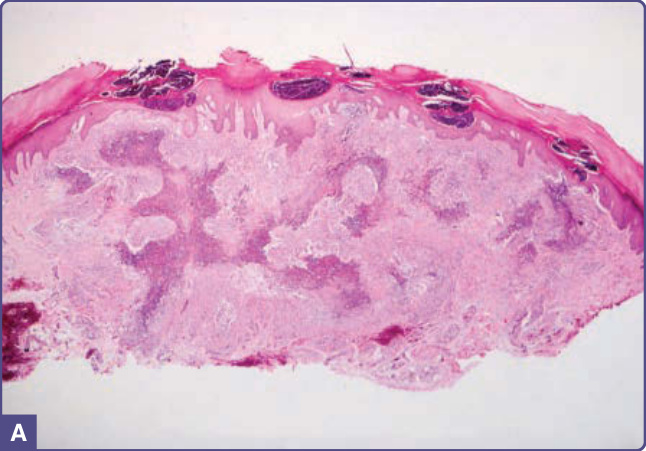
Figure 34-7 A and B, Histopathology of perforating granuloma annulare. (Used with permission from the Graham Library of Wake Forest Department of Dermatology.)
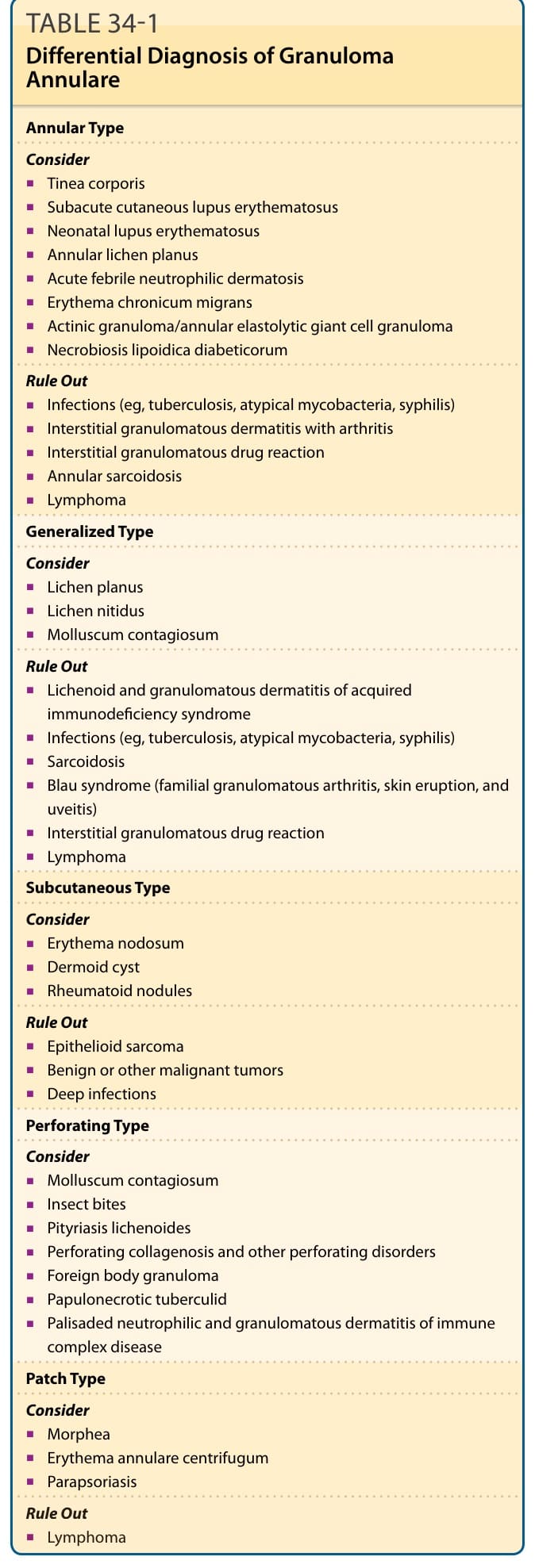
TABLE 34-1 Differential Diagnosis of Granuloma Annulare
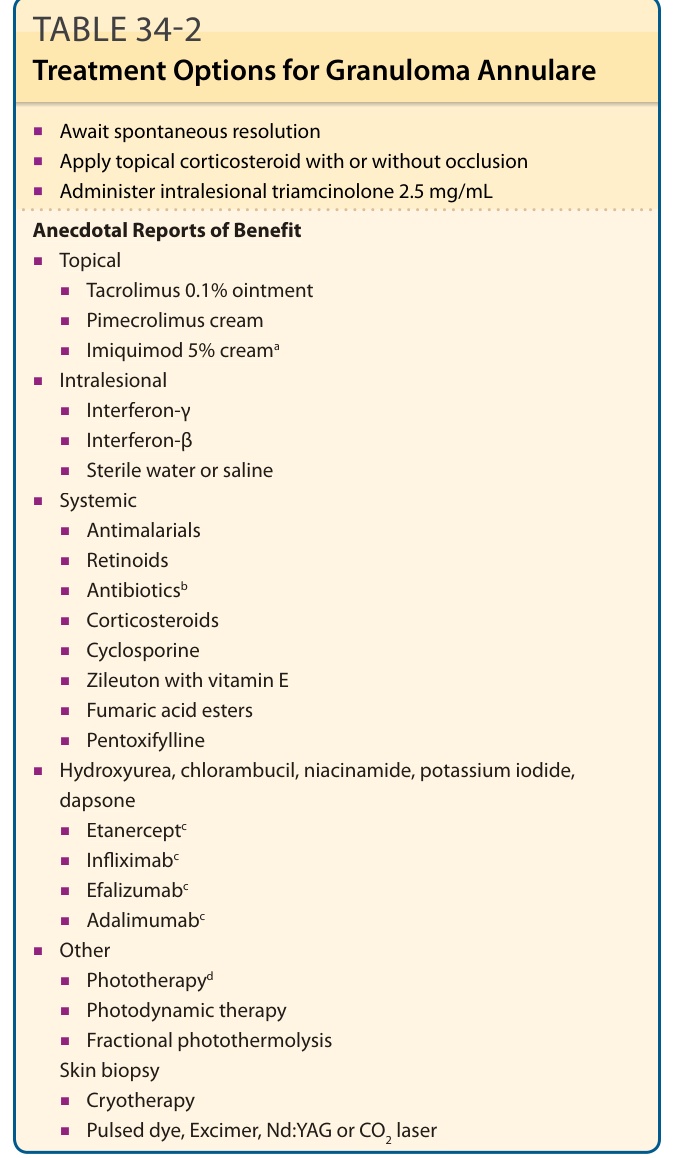
TABLE 34-2 Treatment Options for Granuloma Annulare